
Close Menu

Many e-commerce owners want to run Google Ads but feel overwhelmed by setup, bidding, product feeds, and what to expect from their first campaigns. 

This beginner-friendly guide explains how Google Ads works for online stores, how to structure your campaigns, and how to build a foundation that leads to profitable results.

Key takeaways:

  • Learn the core Google Ads formats used by successful online stores.
  • Understand real performance benchmarks for Search, Shopping, and Performance Max.
    Set up tracking, product feed, and campaign structure the right way.
  • Follow proven steps to optimize, scale, and avoid common mistakes.

Why Google Ads Matters for E-Commerce Growth

Google Ads offers unmatched buying intent. When shoppers search for products, they reveal exactly what they want, allowing online stores to capture demand at the perfect moment.

Reports show that Google Ads helps online stores reach high-intent customers faster than most paid channels. It also gives advertisers complete visibility into performance metrics, enabling them to refine campaigns over time.

What Good Performance Looks Like for Beginners

Beginners often wonder whether their numbers are “normal.” Benchmark studies help set realistic expectations.

  • The average conversion rate for e-commerce Search campaigns is roughly 2.8%
  • General Google Ads conversion rates across industries average around 7.5%
  • Shopping ads convert around 1.9% on average
  • The typical CPA for e-commerce Search generally ranges from $45 to $100, though it can vary widely based on several factors.

If early campaigns land near these ranges, performance is within a normal beginner baseline. Improvement comes from optimization, data, and better product feed quality.

The Foundation: What Every Beginner Must Set Up First

Before spending any budget, get your technical base right. Poor tracking or a weak product feed leads to wasted spend.

Build tracking and measurement

Install GA4, set up conversions, enable enhanced measurement, and connect Google Ads with Analytics. Proper conversion tracking predicts campaign success more than any targeting or bidding setting.

Set up Merchant Center and your product feed

For Shopping campaigns, Google relies directly on your product data, especially accurate titles, clean images, correct pricing, and updated availability. Product feed health impacts visibility and cost.

Strengthen product pages and store UX

Even the best ads fail if the store loads slowly or lacks trust signals. If the store struggles with UX or conversion flow, a team like Impremis can help optimize landing pages and navigation to improve conversion rates before ad spend ramps up.

Choosing the Right Google Ads Campaign Types

Beginners should focus on the core formats that drive predictable returns for online stores.

Search Campaigns

Search ads put your products in front of shoppers actively typing in purchase-ready keywords. They’re essential for beginners because they provide predictable intent and clean data.

Shopping Campaigns

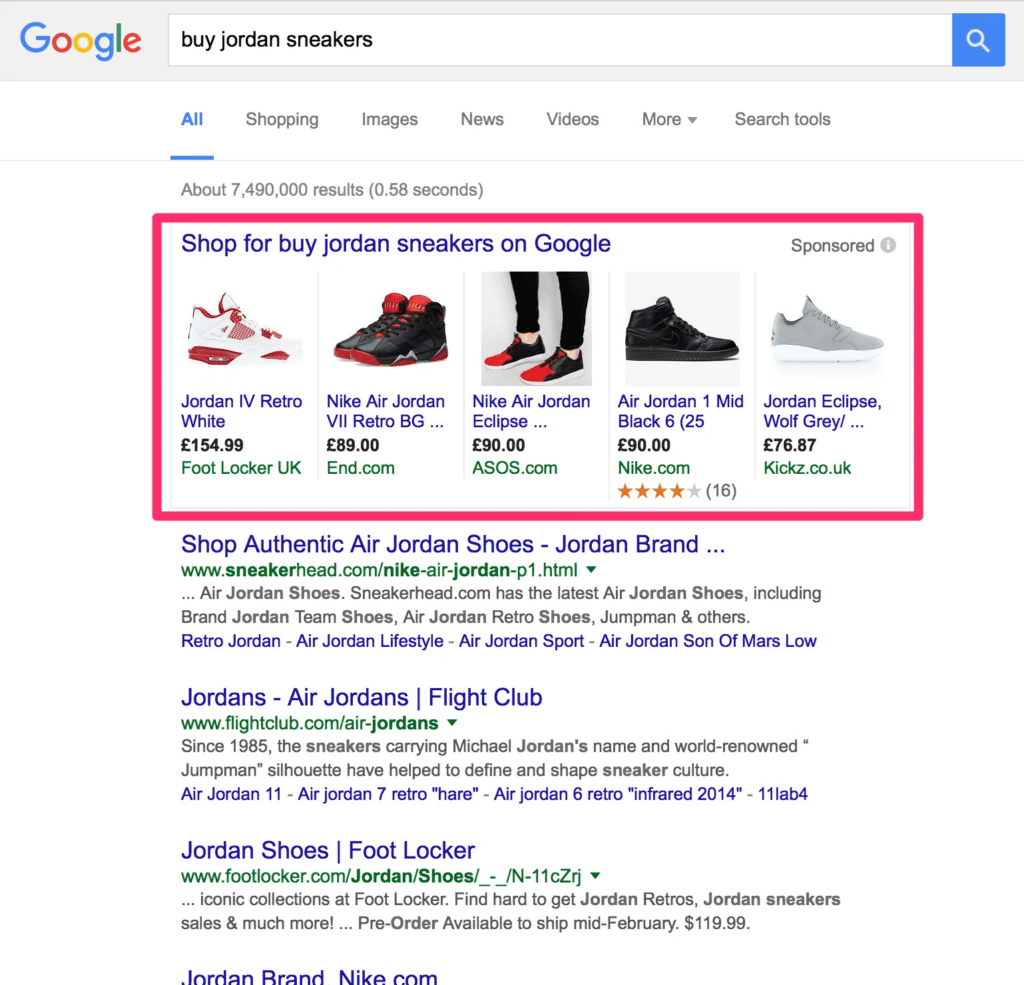
Shopping ads show product images, prices, and titles. Research shows that high-quality images and keyword-rich product titles increase click-through and conversion rates.

Performance Max

Once Search and Shopping produce stable results, add Performance Max. Performance Max works best when product feed quality is high and conversion tracking is fully accurate.

Beginner-Friendly Campaign Structure

Beginners often overspend by mixing too many products and keywords into one campaign. A simple structure works best.

For Search Campaigns

  • One campaign for the core product category
  • Tight ad groups with focused keyword themes
  • Responsive search ads with multiple benefit-driven headlines

For Shopping Campaigns

  • One Shopping campaign to start
  • Segment products by margin or bestsellers later
  • Ensure your feed titles include brand, product type, size, color, or features

For Performance Max

  • Add once you have 30–60 days of conversion history
  • Supply strong creatives and accurate product feed
  • Use audience signals based on past customers or site visitors

If structuring campaigns feels overwhelming, Impremis can support setup and ongoing management through its performance marketing services.

Optimization Tips That Drive ROI

The strongest Google Ads results come from consistent, weekly improvements.

Improve product titles

Keywords in a product title dramatically influence Shopping visibility.

Monitor key metrics

Track metrics such as CTR, CPC, conversion rate, CPA, and ROAS. Compare your results against current industry benchmarks to spot opportunities.

Improve store UX

Slow load times and confusing layouts reduce conversions. Impremis helps brands improve user experience and conversion flow.

Scale slowly

Increase budgets only when performance stays consistent for at least two weeks. Avoid rapid scaling that distorts cost efficiency.

Frequently Asked Questions

What budget should a beginner expect to start with on Google Ads?

Most beginners see meaningful data at $30 to $50 per day across Search and Shopping. 

Smaller budgets often produce slow learning. If budget allocation or structure feels unclear, Impremis can help create a scalable plan and optimize spend for stronger ROI.

How long until a new e-commerce Google Ads campaign becomes profitable?

Most stores need about 30 to 60 days of testing as Google learns what converts. Profitability depends on product pricing, margins, feed accuracy, and store UX. 

Impremis helps brands shorten this ramp-up time by improving conversion paths and ad structure.

Why do Google Ads get clicks but no sales for online stores?

This usually means the product page or checkout process has friction. Examples include unclear value, slow load times, lack of trust badges, or weak descriptions. 

Our team specializes in conversion rate optimization and web design improvements that turn ad traffic into sales.

Ready to Launch High-ROI Google Ads Campaigns?

If you want expert help with campaign setup, product feed optimization, or improving conversion rates, Impremis can support the entire process. 

Explore capabilities on the Impremis website or connect with the team through the contact page to build a profitable e-commerce advertising strategy.

When businesses run ads on Facebook and Instagram, collectively the Meta Ads ecosystem, many hope for big returns. But rising competition and changing user behavior mean it’s no longer enough to just “boost a post.”

To truly maximize Facebook ads ROI (and Instagram ads ROI) in 2026, advertisers must marry smart strategy, sharp creativity, and data-driven optimization.

In this article, you’ll discover:

  • recent performance benchmarks and what “good” performance looks like,
  • platform-specific strengths to exploit,
  • concrete steps to cut costs and boost conversions,
  • and real-world tactics you can use now to improve Meta ads performance.

Key takeaways: define clear goals, design ads for each platform’s strengths, track the right metrics, and optimize constantly.

Understanding the Benchmarks: What “Good” Looks Like in 2025 to 2026

Before optimizing, you need context. These benchmarks help you gauge whether your campaigns are underperforming or ready to scale.

What this means: If your Meta ads deliver ~9–10 percent CVR, sub-$1.50 CPCs, and healthy CTR, performance is aligned with industry standards. Anything below signals the need for optimization.

Why You Must Treat Facebook & Instagram Ads Differently

Even though both platforms run on Meta’s ad system, user behavior and creative expectations make each platform unique.

Facebook: Precision targeting + conversion funnels

  • Facebook performs well for lead generation, longer copy, and deeper-funnel users, according to insights from Unity Connect’s Facebook vs Instagram guide.
  • Custom audiences, behavior-based targeting, and lookalikes help improve accuracy and reduce wasted spend.

Instagram: Visual storytelling + impulse-driven engagement

  • Instagram thrives on video, Reels, Stories, and carousel content that blends into the feed, supported by recommendations from Brandwatch’s Instagram ads best practices.
  • Authentic visuals tend to outperform “polished” ad-style images.

Hence, use Facebook for deeper consideration and conversions. Use Instagram when you need to spark attention, inspire clicks, or drive fast visual engagement.

7 Strategies to Maximize Meta Ads ROI in 2026

1. Define clear campaign objectives

Meta optimizes based on your chosen objective. Changing the objective mid-campaign hurts results. This is backed by the Meta ads setup framework explained by Improvado.

2. Build precise audiences and test lookalikes/retargeting

  • Use custom audiences (site visitors, email lists, high-intent engagers).
  • Build lookalike audiences from top customers.
  • Retarget users who abandoned carts, signup flows, or key pages.

Precise targeting improves conversion rates and reduces CPC.

3. Match creative format to platform

  • Use Reels, Stories, and native-feeling video for Instagram.
  • Use longer, benefit-forward copy and Instant Experience ads on Facebook.
    Industry insights from Unity Connect reinforce this divide.

4. Ensure landing pages convert

Your landing page determines whether the click becomes revenue. Slow load times, mismatched messaging, and confusing UX crush ROI.

If you need help improving post-click conversion, explore Impremis performance marketing capabilities.

5. Monitor the right metrics

Track CTR, CPC, CVR, cost per result, ROAS, bounce rate, time on page, and form completions. Compare performance regularly to the benchmarks above.

6. Use a full-funnel, test-and-scale structure

  • Start with awareness or traffic campaigns.
  • Move engaged users to mid-funnel ads.
  • Retarget warm audiences for conversion.
  • A/B test creative, copy, audiences, and landing pages.

7. Scale budgets slowly

If an ad performs consistently, increase spend gradually. If costs spike, pause and analyze before pushing more budget.

Example Meta Ads ROI Optimization Framework for 2026

  1. Choose objective
  2. Build custom + lookalike audiences
  3. Create platform-specific ad formats
  4. Launch multiple variations
  5. Review data after 3–5 days
  6. Pause poor performers
  7. Retarget engaged users
  8. Improve landing pages and UX
  9. Re-test every 2–4 weeks

Frequently Asked Questions

Q: How soon should I expect ROI from Meta ads?

It depends on your funnel and offer. Some see results within days, others need several weeks of testing. Impremis builds fully optimized funnel experiences that speed up ROI by improving the journey from ad click to final conversion.

Q: Why are my Meta ads getting clicks but not conversions?

This typically points to issues with your landing page: poor UX, slow loading, mismatched messaging, or unclear steps. Impremis fixes these friction points through UX design, development, and conversion-rate optimization.

Q: Should I run Facebook and Instagram ads together?

Often yes, because both platforms serve different roles. Facebook is stronger for conversions and lead generation. Instagram excels at visual engagement and top-of-funnel awareness. Impremis can help you build an integrated Meta ads strategy across both.

Ready to Turn Clicks Into Conversions?

If you want to boost Meta ads performance, increase conversion rates, or upgrade your landing page UX, Impremis can help. Explore full-service capabilities at Impremis or contact here to build a high-ROI Meta ads strategy.

Shopping cart0
There are no products in the cart!
0